In the quiet Salento countryside, among expanses of olive trees, farms and dry stone walls, stands the Quercia Vallonea Tricase, the historic tree considered by many to be a true natural monument.
An unmissable stop for anyone visiting Salento, this ancient tree over time has become the icon of the area, a place of legends and history which, with its 900 years, is considered a symbol of resistance and connection with the past.
If you are about to visit the characteristic village of Tricase you absolutely cannot miss this wonder of nature. In this article you will find all the useful information to visit the Vallonea Tricase oak, its history and advice to best organize your visit.
General information: a giant almost 1000 years old
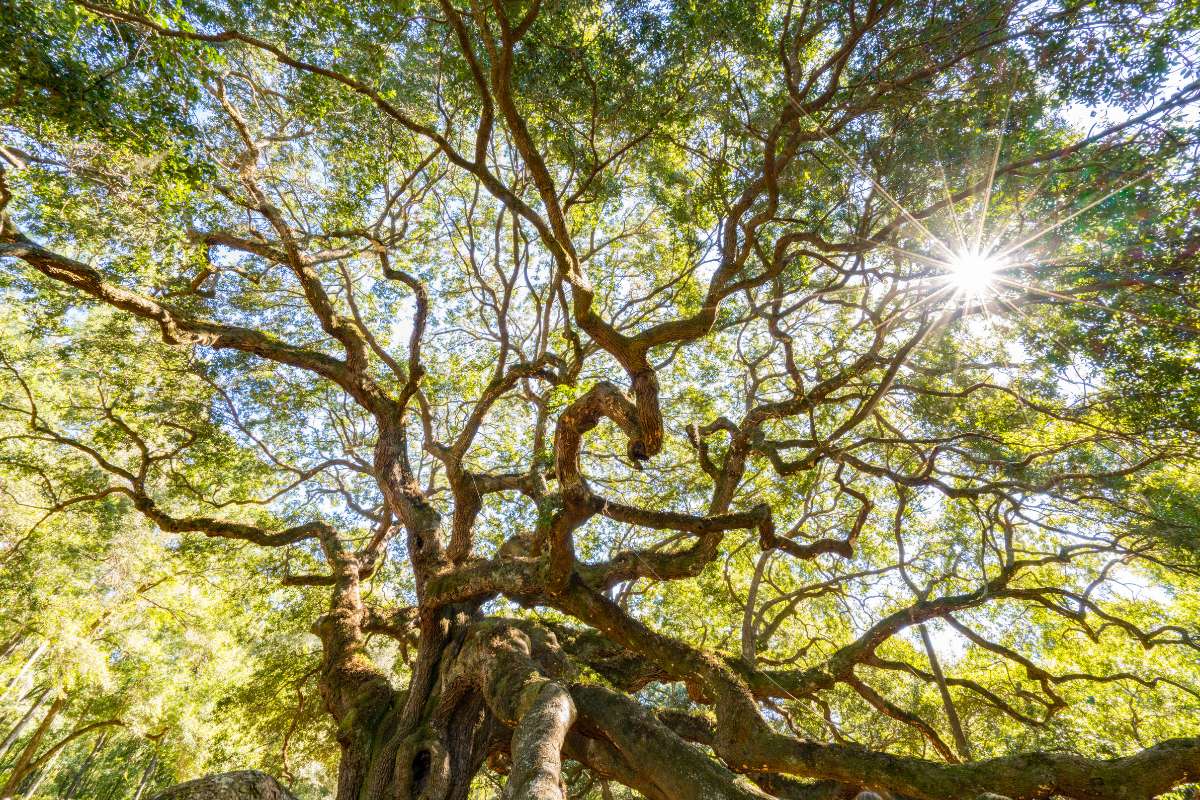
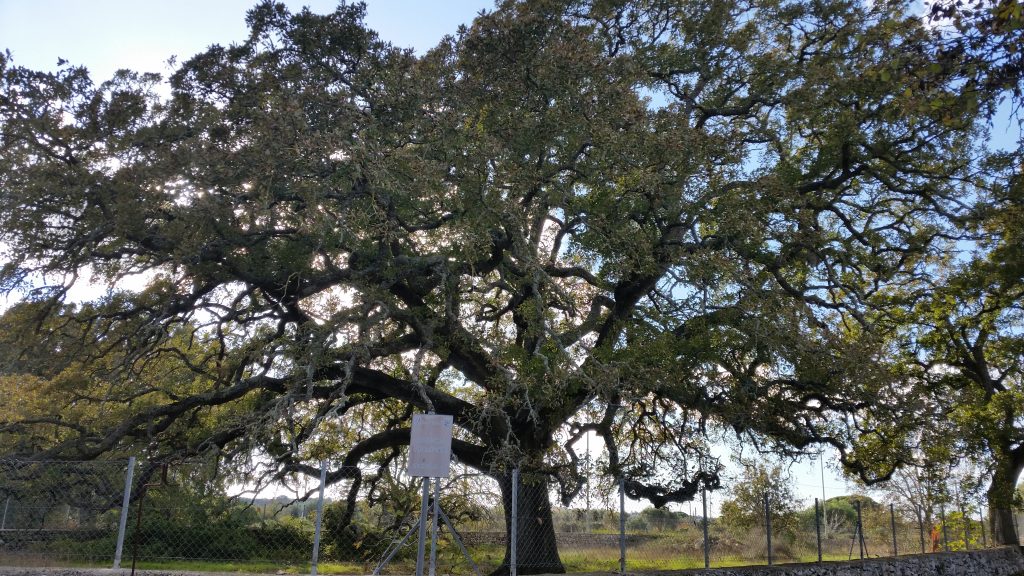
The Quercia Vallonea di Tricase is one of the largest and oldest specimens in Italy, belonging to the species Quercus ithaburensis macrolepis. It stands out for its imposing foliage, which covers an area of approximately 700 square metres, and a trunk that reaches 4.50 meters in diameter. Its longevity and its ability to resist bad weather make it one of the main naturalistic attractions of the whole of Salento..
The Vallonea Tricase seems to be originally from the Balkans and Asia Minor and its presence in Salento would testify to the ancient commercial links with the East. The bark, particularly wrinkled and thick, has characteristic cracks that create suggestive natural designs.
But why is it so special? In addition to its centuries-old age, the oak has a strong link with the history of the area, an example of perfect symbiosis between man and nature. For centuries, local inhabitants have used the tannin product to color nets and sails, tan leather and keep insects away from tobacco leaves laid out to dry in the sun. Furthermore, its acorns, during the years of famine, provided food for the local population.
History of Quercia Vallonea
It is estimated that Quercia Vallonea is over 900 years old and its history is deeply intertwined with that of Salento. Over the centuries, it has witnessed the passage of dominations and has survived wars, epidemics and climate changes.
Planted around the year 1000, probably during the period of Byzantine domination, this tree over time has become a symbol of resistance and continuity. Its longevity is a testimony to past eras, the evolution of a land rich in culture and traditions.
The importance of the oak is not just historical. In recent years, its value has also been recognized at an international level, thanks to numerous protection initiatives that have allowed its conservation, above all the recognition by UNESCO and the WWF. Today it is protected as a natural monument and attracts visitors from all over the world.
The botanical experts who have studied it claim that it is one of the last specimens of a species that once populated much of Salento. Dendrochronological analyzes revealed that the tree has gone through periods of strong climatic stress, adapting and surviving thanks to a complex root system that extends for tens of meters underground.
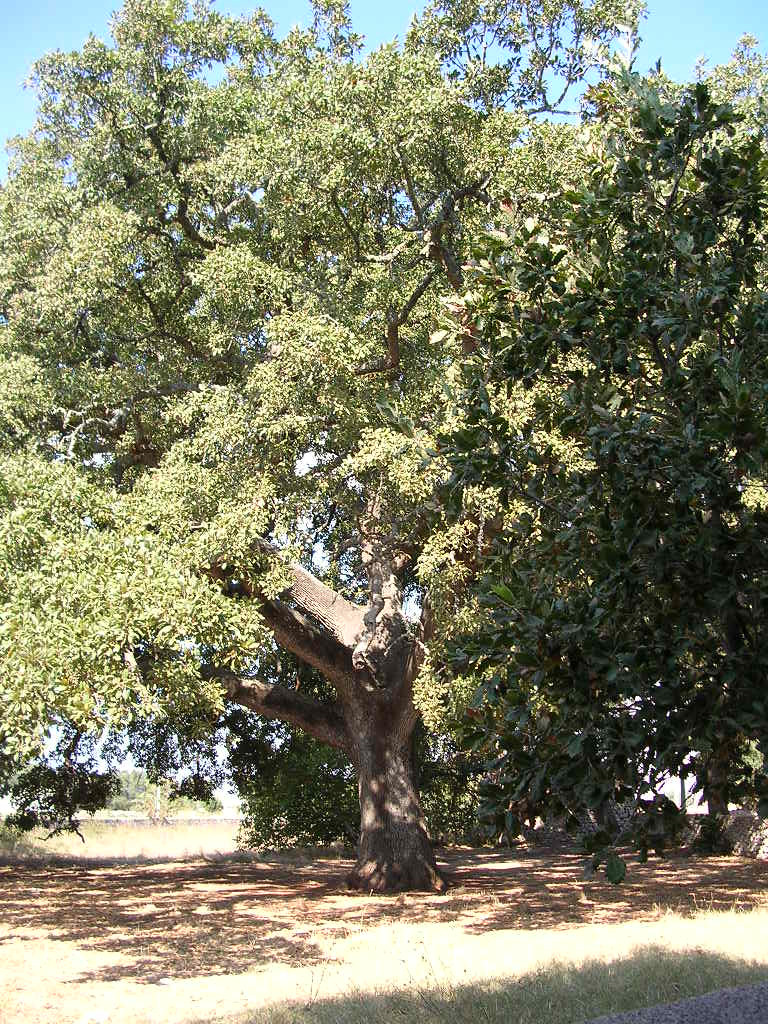
Quercia Vallonea Tricase legend
Popular tradition has woven various legends around the Quercia Vallonea di Tricase.
The ancient Greeks apparently attributed to it magical powers and, depending on the noise of the branches moving in the wind, the oracles were able to predict the future.
The best-known story, however, is the one whose protagonist was stupor mundi, Frederick II of Swabia, who found shelter under the canopy of the tree together with its hundred knights, during a violent storm. Hence the nickname “Oak of the Hundred Knights”.
These stories, handed down from generation to generation, have contributed to creating an aura of mystery and charm around the Quercia Vallonea di Tricase. Its majesty is not only botanical but also symbolic, representing a spiritual and cultural point of reference for the whole of Puglia.
Prices and opening times
A positive aspect about the Quercia Vallonea di Tricase is that you can visit it freely without paying anything.
There are no tickets to buy or timetables to respect, the tree is always there, ready to welcome you.
To best enjoy the visit it is advisable to go in theearly hours of the morning or at sunset, when the sunlight creates suggestive reflections on the leaves.
Remember that you are visiting a natural place, it is necessary to respect both the tree and the environment that surrounds it. The atmosphere around the Quercia Vallonea is filled with an almost mystical peace, you can take all the time you want to admire this ancient giant.
Tricase Quercia Vallonea: where it is and how to get there
The Quercia Vallonea di Tricase is located between Santa Maria di Leuca and Otranto, precisely in Tricase, in the Regional Park Costa Otranto-Santa Maria di Leuca and Bosco di Tricase. Reaching it is quite simple, whether you come by car or bike.
By car: from the SS275 Maglie-Leuca, take the exit for Tricase and follow the signs for Serra del Mito. The route is well signposted and the landscape that accompanies you along the way, between olive groves and countryside, makes the journey particularly pleasant.
By bicycle: if you are a lover of cycle tourism, Salento offers spectacular routes. The road that connects Otranto to Leuca passes near Tricase, and from there you can easily reach the oak tree by following the local directions. An excellent opportunity to explore the area on two wheels, surrounded by nature.
Experiences nearby
If you are in Tricase to visit the Quercia Vallonea, take the opportunity to explore the surroundings too. Tricase is a delightful village rich in history and culture, with its fascinating historic centermade of stone streets and characteristic tower houses.
There is no shortage of churches, a symbol of the devotion of the inhabitants: among those to visit there is the Church of San Michele Arcangelo and that ofSan Domenico.
Don’t miss a visit to Tricase Castle, dating back to the 14th century and also known as Palazzo dei Principi Gallone. Treat yourself to a walk in Tricase Porto, a natural inlet overlooking the Adriatic Sea.
For lovers of local cuisine, Tricase also offers several taverns where you can taste typical Salento dishes, such as puccia and pasticciotto. A true delight for the palate!