There is a place, in the heart of Salento, where time seems to bend to the charm of stone and ancient stories. In Lecce, every corner speaks with its own voice, and among its many faces, there is one that welcomes you like a silent guardian of history: Porta Napoli Lecce. It is not just a monumental arch, but a symbolic gateway, an invitation to enter a city that knows how to conquer those who have the courage to slow down, observe, and listen.
Here, art does not show itself all at once: it reveals itself slowly, between the golden light of the sunset that caresses the stone embroidery and the alleys that wind like threads of a centuries-old plot. Lecce does not impose itself, but conquers with the grace of its baroque churches, with its majestic palaces and with the intimate beauty of hidden details.
On this journey, we will accompany you right there, under the majestic arch of Porta Napoli, to discover together one of the most fascinating symbols of the city. And when you cross it, perhaps you too will feel that magic that has earned Lecce the nickname of “Florence of the South“.

General information about Porta Napoli Lecce
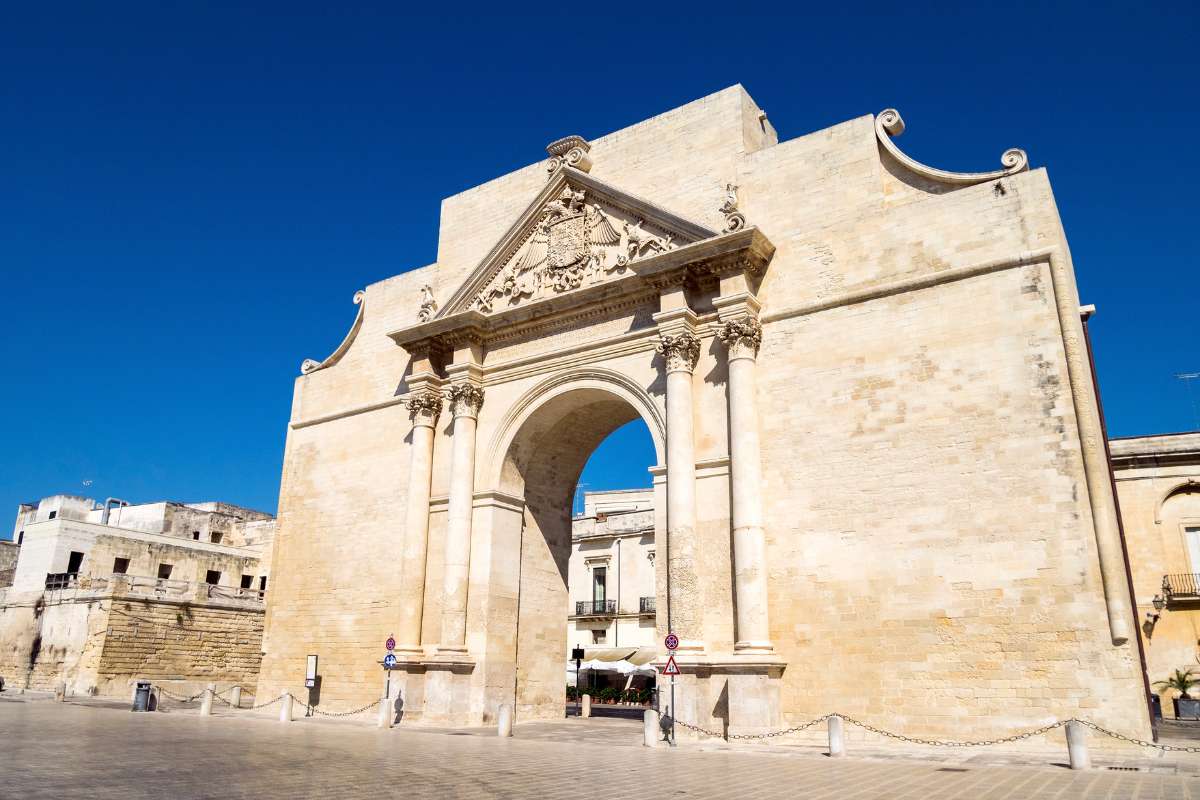
Porta Napoli Lecce, also known as Arco di Trionfo, is the most imposing and prestigious gateway to the historic center. Built in 1548 in honor of Emperor Charles V, it appears as a triumphal arch about 20 meters high.
The monument marks the northern entrance to the old city, at the beginning of Viale dell’Università, and was once the main opening in the defensive walls. Even today, its elegant mass dominates the square known as Piazzetta Arco di Trionfo and amazes with its harmonious proportions.
From Porta Napoli Lecce an itinerary to discover the Lecce Baroqueideally begins: stop to admire the arch and you will notice, above you, the sculpted triangular pediment and on the sides two mighty Corinthian columns, which frame the passage. Passing under Porta Napoli means crossing a symbolic border between the modern life of the new city and the ancient atmosphere of the historic center.
History of Porta Napoli Lecce
The construction of Porta Napoli Lecce dates back to the 16th century, a period of great changes for the city. It is 1548: Charles V of Habsburg, emperor and king of Naples, had recently consolidated his power in Southern Italy and considered Lecce a strategic bulwark against threats from the East.
To make the city impregnable, the emperor implemented an ambitious program of fortifications, which included the construction of new bastion walls, a castle and a new monumental entrance portal. The local governor, Ferrante Loffredo, commissioned the court architect Gian Giacomo dell’Acaya to design a triumphal gate that would worthily celebrate the power of the Spanish empire.
The chosen location was already full of significance: here once stood the ancient Porta San Giusto, which in Roman times marked the intersection between the walls and the important Via Traiana-Appia coming from the north. Building Porta Napoli Lecce at this point meant not only paying homage to tradition but also going beyond it, providing Lecce with a monumental entrance worthy of its importance.
The gate was dedicated to Charles V himself, celebrating his military victories and role as protector of the city. In 1548 the new Gate – also called “Porta Reale” – was inaugurated with full honors, in the presence of the most important city authorities.
In the following centuries, Porta Napoli Lecce continued to perform the function of the main access to the city. Illustrious travelers, armies, merchants and pilgrims passed through it. In the Baroque era, the nobles of Lecce would have their processions pass through it and again in the seventeenth century the bishop Luigi Pappacoda chose to solemnly enter the city right here, to underline the importance of his arrival.
Over time, the old defensive walls lost their military function and were partly demolished to expand the city. Porta Napoli, however, remained standing and today, after more than four centuries, it preserves its majesty intact.
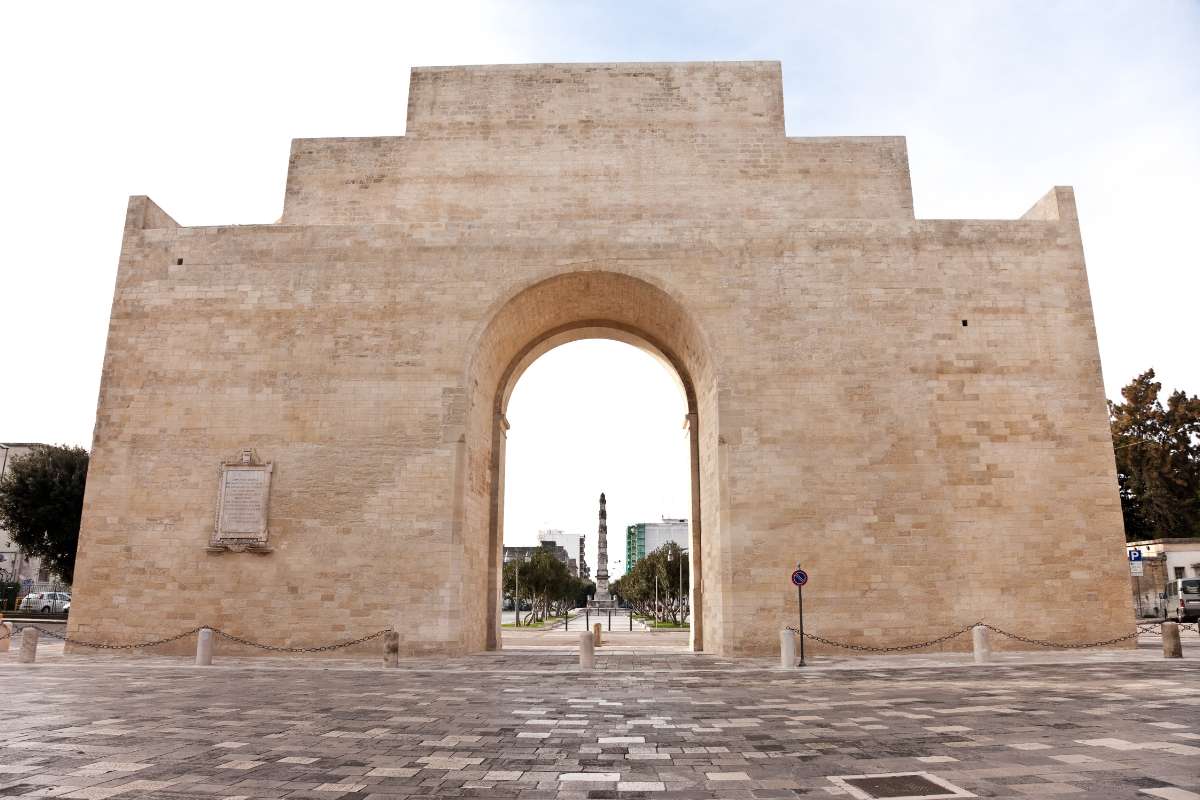
Architecture of Porta Napoli Lecce
Architecturally, Porta Napoli Lecce is an example that blends military functionality and artistic celebration. Dell’Acaya designed it taking inspiration from Roman triumphal arches, but giving it a sober and elegant appearance, closer to Renaissance classicism than to Baroque splendor (which in the mid-1500s had yet to explode in the city).
When viewed from the front, the large round arch in the center is striking, framed by two pairs of Corinthian-style columns on the sides. The columns support a large triangular pediment similar to the tympanum of a classical temple, giving the whole an air of a solemn temple of victory. The richest sculptural decoration is concentrated on the pediment: in the center stands the enormous imperial coat of arms of the Habsburgs carved in Lecce stone, with the double-headed eagle clutching the shield of Charles V.
On the sides of the coat of arms, as if composing a trophy, there are elements that explicitly recall military triumphs and that recall the decorations of Roman triumphal arches.
A curious detail of the architecture of Porta Napoli is the upper crowning: in fact, observing carefully, above the pediment you will notice a stepped motif and this particular decorative element, of Angevin-Durazzesca origin, has been interpreted as symbolic of the three great victories of Charles V on three continents (in the American Indies, in Gaul and in Africa).
Where is Porta Napoli Lecce and how to get there
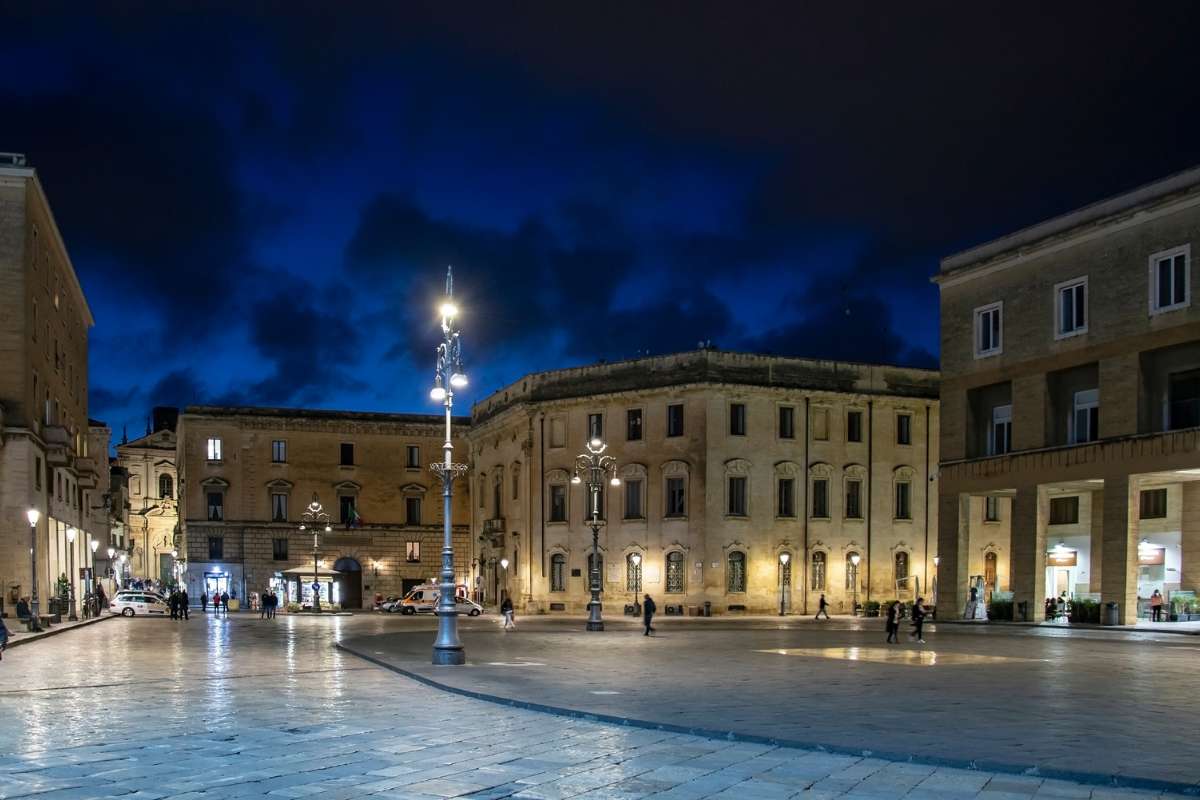
Porta Napoli is located in Lecce at the north-western edge of the historic center, in Piazzetta Arco di Trionfo.
To reach it on foot from the centre of Lecce, start from Piazza Sant’Oronzo and head north-west through the enchanting maze of baroque alleys. The route is short and full of characteristic views: along Via Palmieri, for example, you can already glimpse the outline of the arch in the distance framed by historic buildings.
If you arrive by car, keep in mind that the historic center of Lecce is largely Limited Traffic Zone (ZTL). Porta Napoli marks the border: outside the arch you can look for parking along Viale Calasso or Viale dell’Università.
Alternatively, several city buses stop near the gate, useful if you are moving from the train station or other peripheral areas of the city.
What to see near Porta Napoli Lecce
After admiring Porta Napoli Lecce, your journey continues: in the immediate vicinity there are numerous historical and artistic attractions. We propose a walking itinerary that, starting from the triumphal arch, will guide you to discover the monuments and places of interest in the surrounding area.
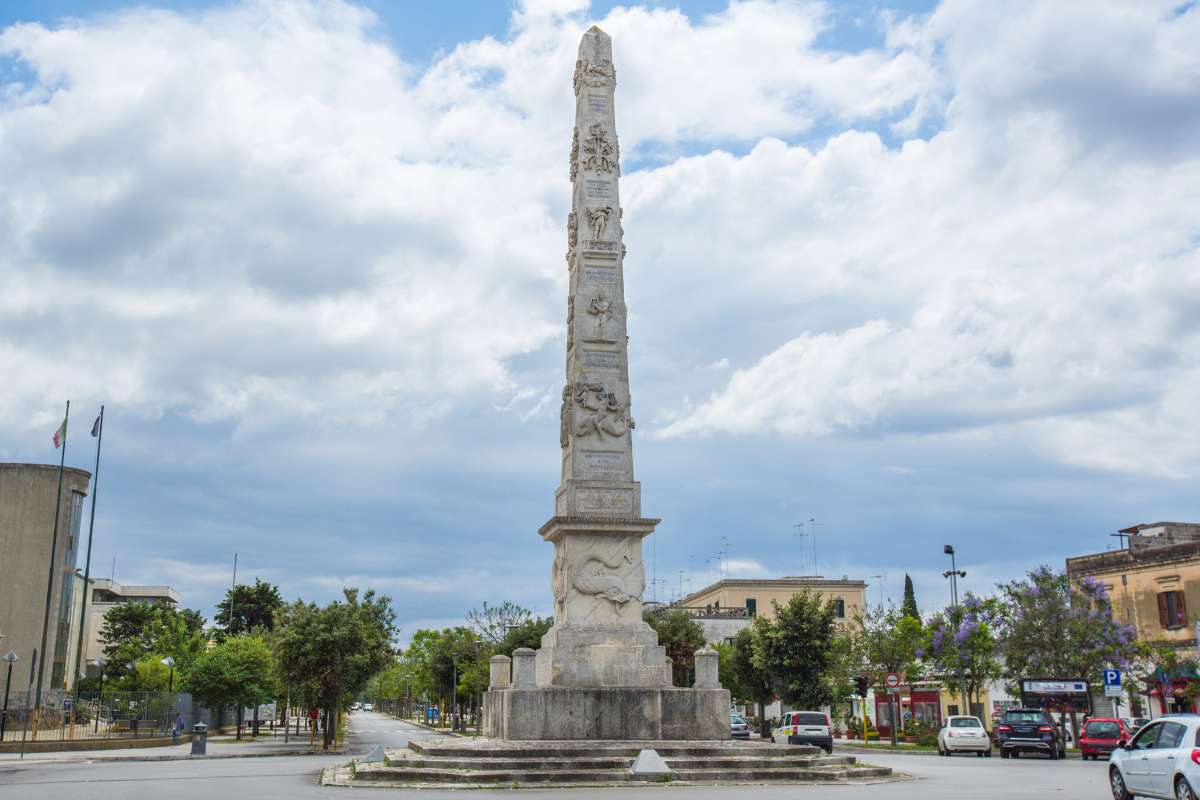
Obelisk of Lecce
Located a few steps from Porta Napoli, theObelisk of Leccedates back to 1822 and is dedicated to King Ferdinand I of Bourbon who had promoted the construction of the road that connected Lecce to Taranto.
Its imposing shape and neoclassical decorations make it a landmark not to be missed.
University of Salento – Ex Collegio Fiorini
Theex Collegio Fiorini is an elegant historic building that now houses the university. Its sober façade is a perfect example of Baroque architecture, with a monumental portal and a large internal courtyard.
Church of Santa Maria della Porta
Small but charming, the small Church of Santa Maria della Porta holds a story of miraculous healing and popular devotion.
What we see today is the result of a neoclassical reconstruction carried out in the nineteenth century by the engineer Giuseppe Magliola.
Palazzo Principe di Lecce
The Palazzo Principe di Lecce is a historic building that probably dates back to the late nineteenth century, officially known as Palazzo Principe Umberto.
Its massive and somewhat austere bulk dominates this stretch of road: three floors with numerous windows framed by sober decorations and an important entrance door.
Palazzo Guarini
Palazzo Guarini a splendid example of an aristocratic residence in Lecce. Built in the 18th century, it has a delightfully ornate Rococo façade.
Look up: you will see a series of balconies with stone balustrades and corbels richly carved with floral motifs, masks and volutes that testify to the expertise of local craftsmen.
Urbiche Walls and Bastions
The ancient Urbiche Wallswere the ancient defensive walls of Lecce and, walking alongside them, you will notice the imposing thickness of the structure in Lecce stone and the pointed shape of the bastions, designed to withstand artillery fire.
Here you can admire the Bastione di San Francesco, one of the best preserved bastions, which with its pincer shape protected this side of the city.
Former Conservatory of Sant’Anna
TheFormer Conservatory of Sant’Anna is an elegant late-Baroque palace, adjacent to the church of Sant’Anna, which once served as a women’s conservatory, a place of religious retreat for noble ladies.
The real treasure is hidden inside: the building, in fact, contains a large internal garden, shaded by a large century-old ficus tree and surrounded by loggias.
Olivetan Convent (Church of Saints Niccolò and Cataldo)
On the avenue that leads to the cemetery, we encounter one of the most fascinating historical-artistic complexes in Lecce: the ancient Olivetan Convent with the Church of Saints Niccolò and Cataldo.
This place has a completely different atmosphere from the baroque center, because it is a rare example of Romanesque Gothic architecture in the Salento area.
Monumental Cemetery of Lecce
Right next to the Olivetan Convent is the Monumental Cemetery, the city’s historic cemetery.
Even if it may sound unusual to include a cemetery in a tourist itinerary, it is worth a visit: here you will find a real open-air museum, where noble chapels and funerary sculptures tell a century and a half of Lecce history.
Basilica of Santa Croce
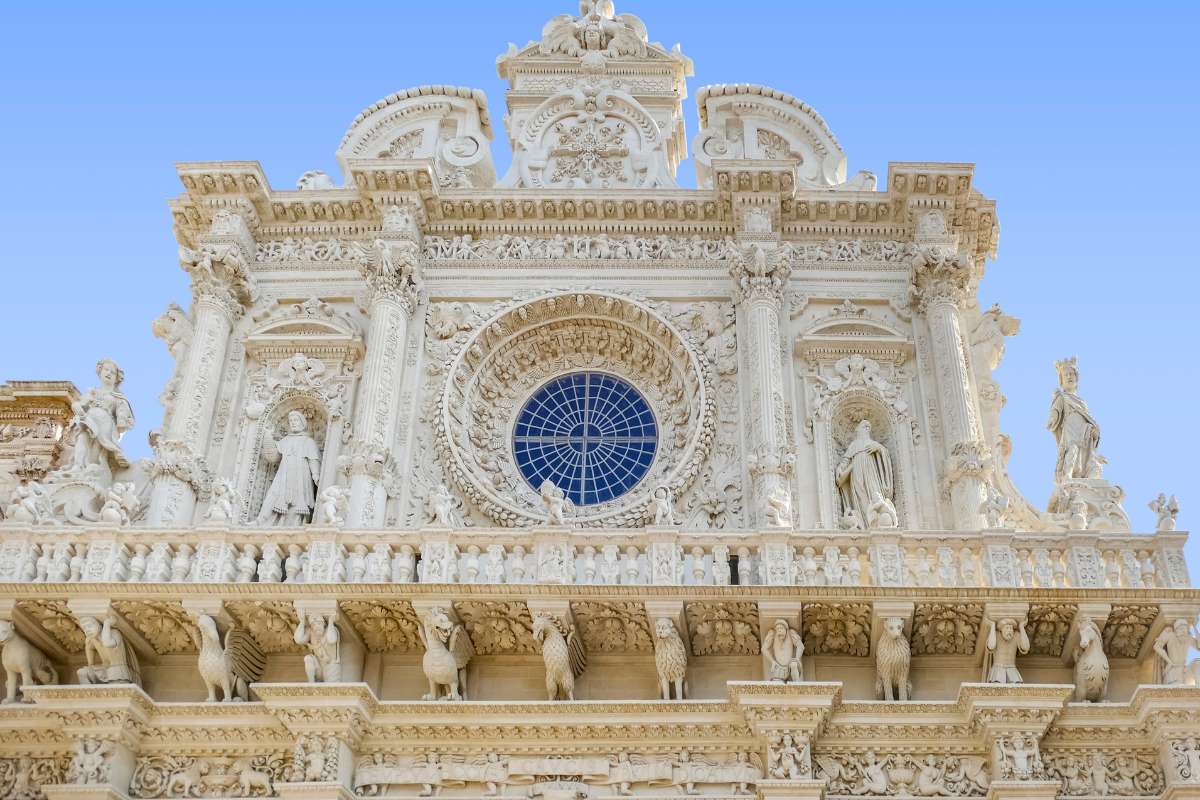
You can’t miss a visit to the Basilica of Santa Croceon your itinerary, the most famous Baroque monument in Lecce, considered the absolute masterpiece of the Lecce Baroque, so much so that it alone is worth the trip.
The construction of the Basilica began in 1549 and continued for over a century: several architects and sculptors worked on it, including Gabriele Riccardi and the Zimbalo brothers, who created the stone lace façade.
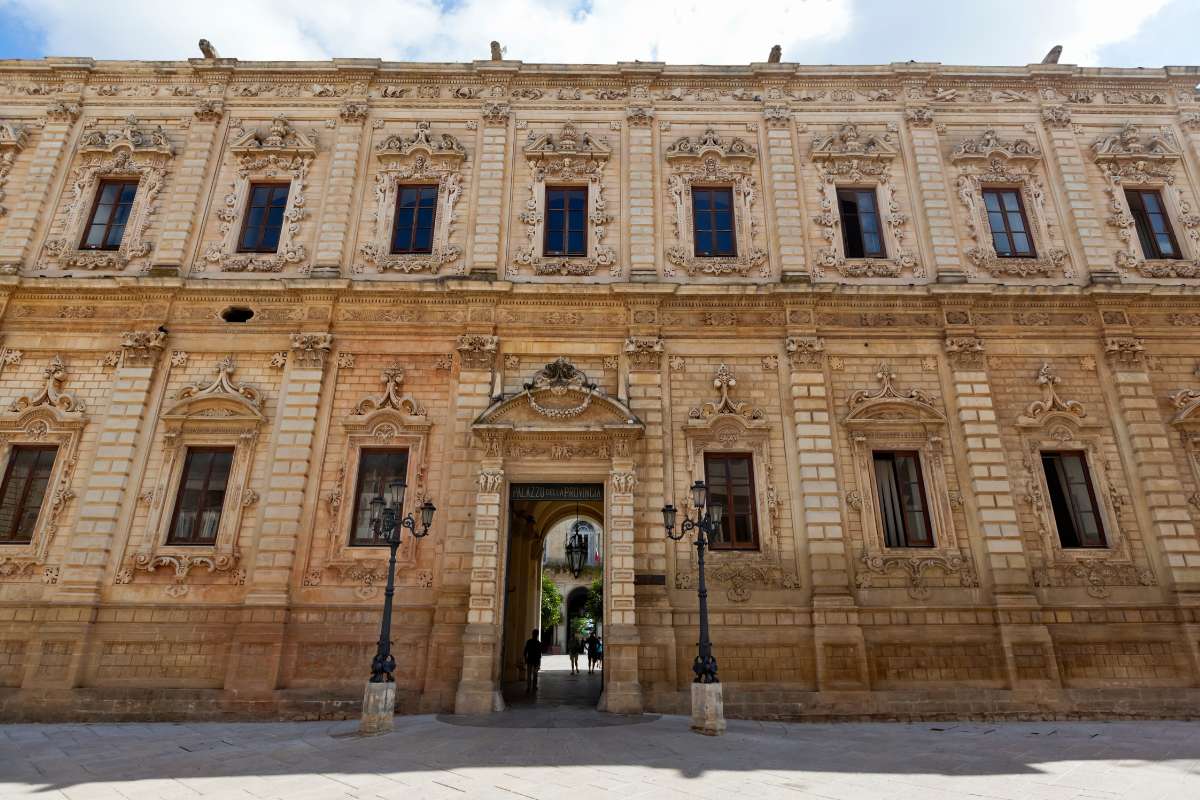
Palazzo dei Celestini and Prefecture
The Palazzo dei Celestini is located next to the Basilica of Santa Croce today houses the Prefecture of Lecce, but once the convent of the order of the Celestine Fathers, also built in the seventeenth century.
Unlike the imaginative flair of the basilica, the façade of the Palazzo dei Celestini is more sober and elegant, marked by a long row of windows with linear baroque frames and a decorated entrance portal, just enough to harmonize with Santa Croce.
The route around Porta Napoli Lecce has made you discover how many treasures are enclosed in a few hundred meters, the confirmation that Lecce is truly a city that surprises at every step.