The Sanctuary of San Rocco Ruffano, located in the heart of Salento, is an important place of worship dedicated to the saint from Montpellier, whose veneration began in the sixteenth century.
The shrine is located in Largo San Rocco a Torrepaduli, a small hamlet that, according to an ancient legend, was chosen by the same saint, miracle worker and protector against the plague, as his home. Precisely for this reason, the local community has celebrated it with great devotion for centuries.
Every year, on the nights of August 15 and 16, the festival in honor of San Rocco comes to life, an event capable of transforming the Salento atmosphere into an explosion of colors, sounds and traditions. With bright ribbons, tambourines beating the rhythm and patrols animating the streets, the celebration is configured not only as a moment of deep devotion, but also as an authentic expression of local popular culture.
History and legend of the Sanctuary of San Rocco Ruffano
The history of the cult of San Rocco in Torrepaduli is shrouded in a legend that still fascinates those who visit the sanctuary. It is said that the citizens of Ruffano decided to move the statue of San Rocco from the small hamlet to the mother church, to give it greater prestige.
During the journey, however, the simulacrum became incredibly heavy, so much so that the porters were no longer able to carry it. Only when the procession, resigned, decided to bring the statue back to Torrepaduli, the weight miraculously disappeared and the statue suddenly became light.
It is said that it was San Rocco himself who chose to stay in this area of Salento where the cult was more rooted, making Torrepaduli his permanent home.

Architecture
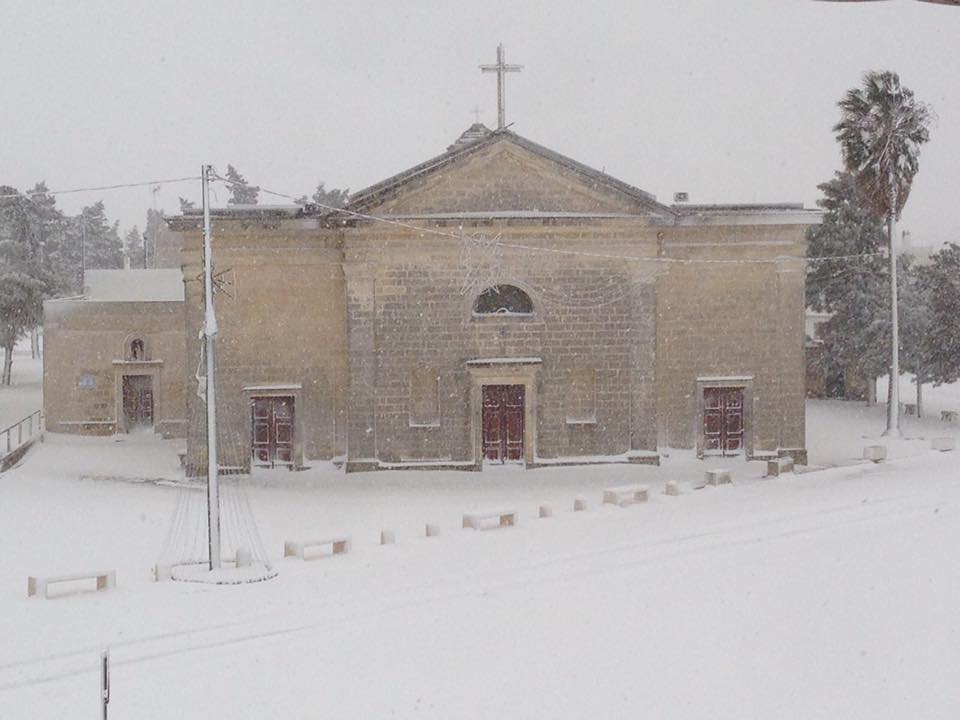
The Santuario di San Rocco Ruffano presents a sober and elegant structure, typical of the rural churches of Salento. The main façade, linear and harmonious, is surmounted by a tympanum with a stone frame that gives balance and grandeur to the structure.
In the center, the stone portal is surmounted by an arched window, a detail that delicately illuminates the interior of the church.
On the sides, two deep empty niches contribute to giving symmetry and charm to the facade, while a cross on the top seals the spiritual identity of the place.
Over time, the sanctuary has been enriched with new functional and significant additions. In 1959, two rooms dedicated to confessions and the collection of offerings were built next to the church, testifying to the liveliness of the cult and the participation of the faithful.
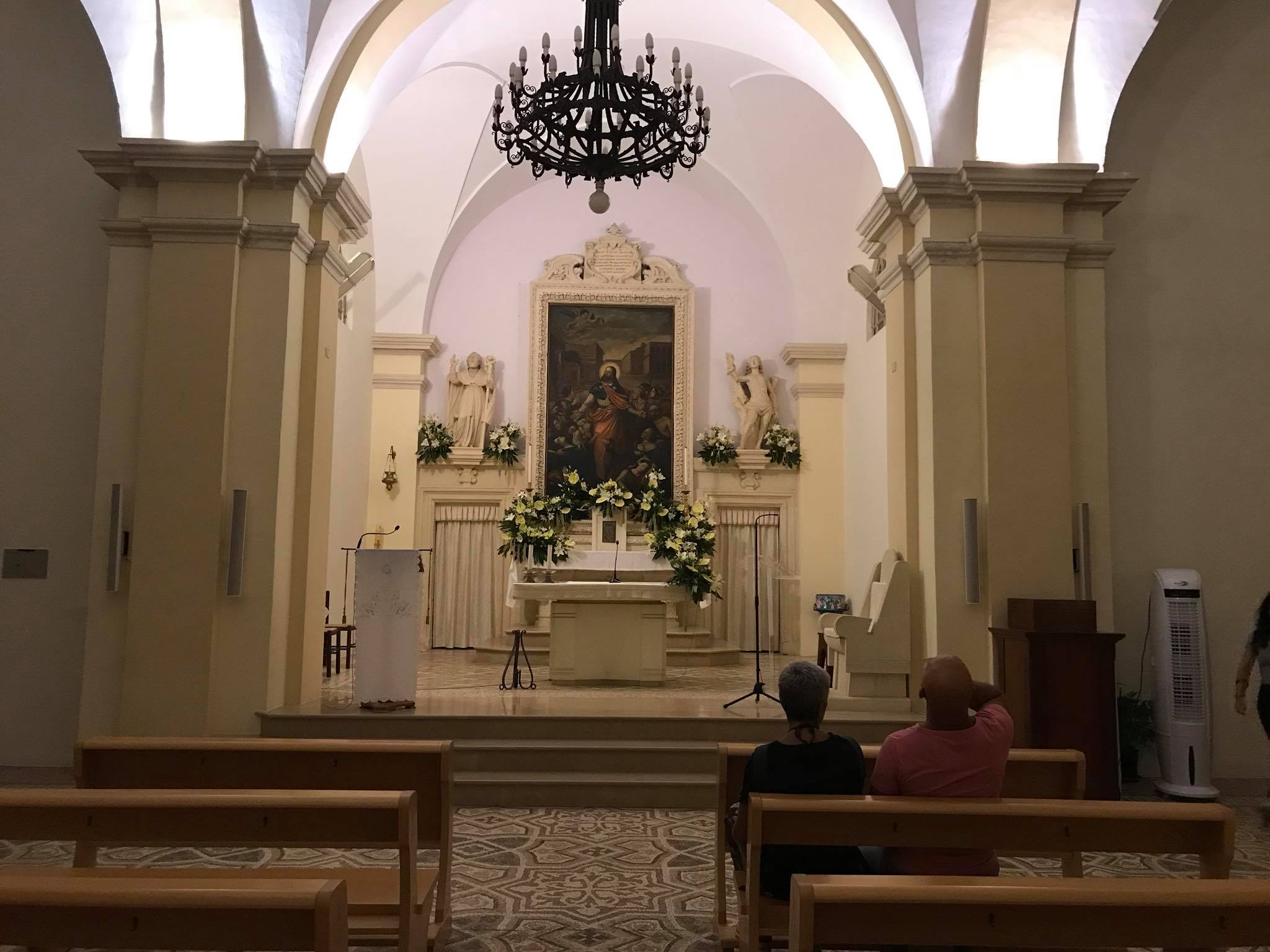
Inside the sanctuary is developed according to a cross plan latina, with a roof characterized by “Leccese” angular vaults, typical of religious architecture in Salento. This type of vault, elegant and solid at the same time, helps to create a welcoming and majestic environment.
The transept, the focal point of the church, houses two altars dating back to the 19th century. The one on the left, in stone, is dedicated to Saint Lucy, protector of sight, while the one on the right, covered in polychrome marble, celebrates the Baptism of Christ. Both altars, with their finely crafted details, represent the popular devotion and craftsmanship of the time.
Another element of great interest is the mosaic floor, made in 1891 by the master Michele Peluso of Tricase. The tiles, arranged with care and precision, form a decorative motif that enriches the environment with a touch of color and art, creating a visual contrast that guides the gaze towards the main altar.
To complete the harmony of the altar, we find the statues of two other saints highly venerated in the Salento tradition: Sant’ Oronzo, placed on the left, and San Sebastiano, on the right. Both sculptures, with their solemn expressions and blessing gestures, seem to protect and accompany the faithful in prayer.
The architectural ensemble, both inside and out, reflects a deep-rooted yet welcoming spirituality, inviting anyone who crosses the threshold to pause for a moment of reflection and contemplation.
Prices and opening hours of the Santuario di San Rocco Ruffano
Entrance to the Santuario di San Rocco Ruffano is free, making it accessible to all. The sanctuary is open every day from 7:30 to 12:00 and from 15:30 to 20:30. Before organizing your visit, we recommend checking for any changes in opening hours during religious holidays or special events.
If you have the opportunity, visit the shrine during the patronal feast: the fervor of the faithful and the beauty of the celebrations will give you a unique experience.
Where it is and how to get to the Sanctuary of San Rocco Ruffano
The Sanctuary of San Rocco Ruffano is located a few steps from the historic center of Ruffano, precisely in Torrepaduli, in the lower Salento, about 50 kilometers from Lecce and 30 kilometers from Gallipoli.
To reach Ruffano by car, you can take the SS 274 from Lecce towards Gallipoli and then follow the signs for Ruffano.
Once you arrive, park your car and take a stroll through the village: the cobbled streets and stone houses will naturally lead you to the sanctuary. The historic center is only about 1 km from the Sanctuary of San Rocco in Ruffano.
What to do in the surrounding area
A visit to the Sanctuary of San Rocco Ruffano can be the perfect opportunity to explore the wonders of the surrounding area.
If you love nature, don’t miss an excursion to the Regional Natural Park of the Ugento Coast, a few kilometers from Ruffano. This uncontaminated corner of Puglia will offer you uncontaminated landscapes, made of sand dunes, pine forests and white beaches.
For history and culture enthusiasts, the historic center of Ruffano deserves an in-depth visit. Stroll through the alleys and discover the Castello Brancaccio, an imposing fortress that dominates the village, and the ancient churches, such as the Chiesa Madre dedicated to the Nativity of the Blessed Virgin Mary. If you have time, stop in Specchia, one of the most beautiful villages in Italy, famous for its votive shrines, ancient portals and Catalan-style loggias.
And of course, you can’t leave Ruffano without sampling the local delicacies. Stop at one of the town’s trattorias and try typical Salento dishes, such as orecchiette with turnip tops, purè di fave con cicoria and delicious pasticciotti. The local wine, a full-bodied Primitivo or a crisp Negroamaro, will be the perfect companion to your meal.