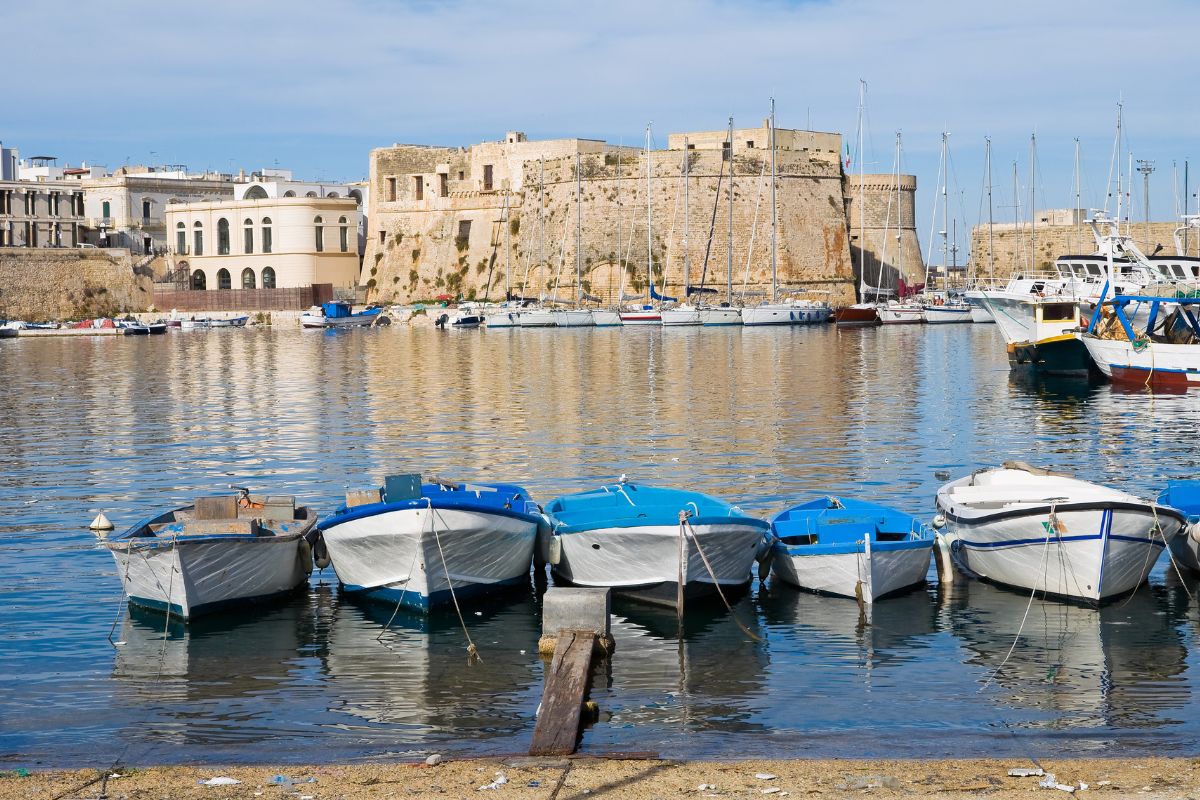
The Gallipoli Castle, located in the beautiful coastal town of the same name in the heel of Italy, is an impressive historical testimony that stands proudly on the sea scenery. This castle, dating back to the Middle Ages, is aicon of power and history that has seen centuries of domination and change.
Gallipoli itself is a city full of charm, with its winding streets that open towards the crystal clear sea, the houses in the court and its historical buildings. Strategically located on the Ionian coast of Salento, Gallipoli has a long history of cultural influences and dominations, from the Greek and Roman civilizations to the medieval era and beyond.
This ancient bulwark is now a must-see for anyone who wants to discover more about the charming town of Gallipoli.
History
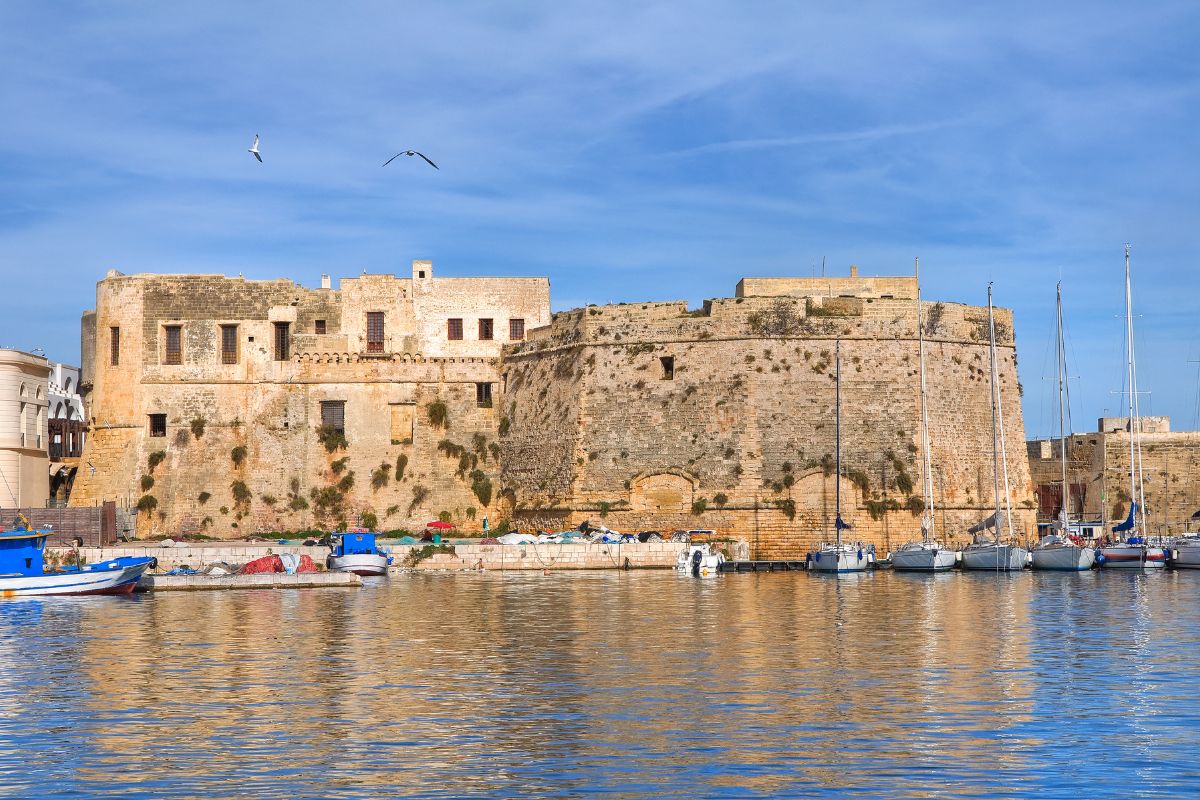
The Castle of Gallipoli, placed to guard the city and its port, represents a symbol of power and defense that has resisted the challenges of the centuries. Originally built after 265 BC, it was initially designed as a fortress to house the legionaries and protect the city from external threats. However, throughout its long history, it suffered devastating damage during the invasions of the Vandals and Goths in the 5th century. Rebuilt during the Byzantine rule, the castle became a subject of contention during the Norman invasions of the 11th century. It was only in the thirteenth century, during the reign of Frederick II of Swabia, that the castle underwent significant renovations, followed by further improvements under the Angioini in the fourteenth century.
During the Renaissance, the castle underwent further modifications to adapt to new war techniques, including the construction of the Rivellino in 1522, designed by architect Francesco di Giorgio Martini. This additional defensive system was used to protect the access to the city and prevent any enemy encampments. Over the following centuries, the castle continued to be a focal point of the defense of the city, undergoing further upgrades and structural changes.
Today, the Gallipoli Castle still retains its grandeur and historical charm, offering visitors the opportunity to visit its imposing halls, its walkways and its cunicoli. As well as being an icon of defense, the castle has also hosted nobles and rulers over the centuries, becoming a place of refuge and power for those who held control.
The structure
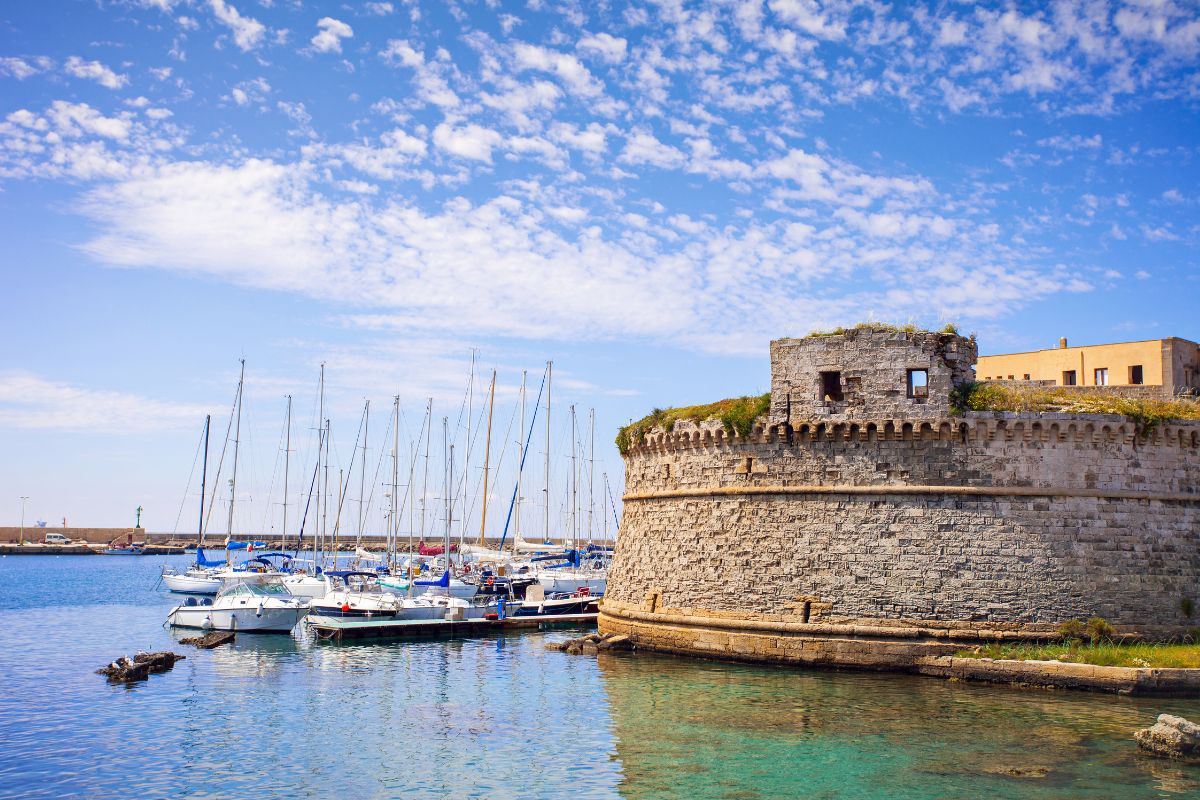
With its imposing size, the Gallipoli Castle looks like a real fortress, with a quadrangular plan and three circular towers that rise into the sky. The presence of the polygonal tower testifies to its evolution over the centuries, while the Rivellino, designed by architect Francesco di Giorgio Martini in the XVI century, is a further defensive addition of great importance. Inside, large rooms with barrel vaults and cruise tell stories of a glorious past, while the tunnels and walkways reveal hidden secrets and escape routes used in ancient times.
General information
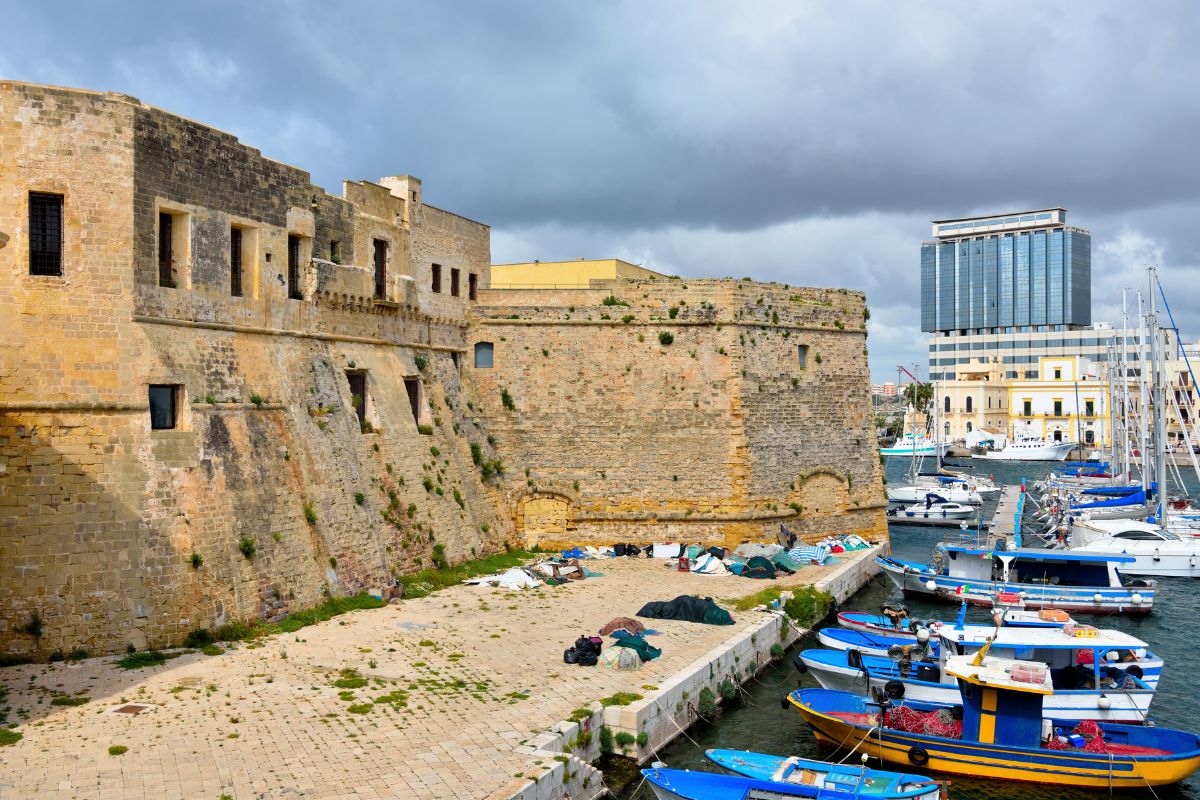
The Gallipoli Castle, once inaccessible to the public, was brought back to life thanks to the intervention of the municipal administration in 2013, which has launched a call for tenders for its reopening and management. In 2014, after the assignment of the project, an intense work coordinated by the Agenzia di Comunicazione Orione based in Maglie, under the guidance of Luigi Orione Amato and the artistic direction of the architect Raffaela Zizzari, has made a visit route accessible. This route, realized in only six months, aims to tell the story of the city and the castle without distorting its original character.
On 5 July 2014, the castle officially opened its doors to the public, with the participation of civil, religious and military authorities. Since then, the castle has become a must-see tourist destination, as well as satisfying a deep-rooted desire in local citizens who can finally admire the interior of the castle and enjoy panoramic sea views from the surrounding terraces.
In 2015,it hosted an exhibition with the artist Michelangelo Pistoletto, who called it Embassy of the Third Paradise. Chosen as one of the venues of the 2015 Universal Exposition the castle continued to be a focal point for cultural events as well as the Premio Barocco. The effective management and exploitation of the heritage has led to the castle becoming a municipal heritage in April 2016, thus contributing to further enriching the cultural offer of the territory.
Prices and Timetables Gallipoli Castle
The opening hours of the Gallipoli Castle are: every day from 10:00 to 19:00, but it is always better to check before the visit. The ticket prices may vary but the cost is generally €8.00.
Reduced 6€ (under 14 and over 65).
Children under 6 pay no fees.
Where it is and how to get there
The Castle of Gallipoli is located in the homonymous town on the Ionian coast, about 40 km from Lecce. To reach the Castello di Gallipoli, you can use public transport or rent a car, enjoying the freedom to explore the area in complete autonomy.
- To reach Gallipoli by train, you can take a FSE regional train from the nearest station in Lecce, which is connected to the main Italian cities. Once you reach Gallipoli, you have to walk about 1 km to reach the manor.